
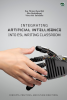
INTEGRATING ARTIFICIAL INTELLIGENCE INTO ESL WRITING CLASSROOM: Concepts, Practices, and Future Directions
Keywords:
english language, artificial intelligence, writing, digital pedagogy, curriculum designSynopsis
This book explores the transformative intersection between Artificial Intelligence (AI) and English as a Second Language (ESL) writing pedagogy, offering a comprehensive framework for educators navigating this rapidly evolving landscape. It argues that AI’s emergence marks not a supplementary shift but a pedagogical imperative, redefining how writing is taught, learned, and assessed. Through theoretical grounding in Constructivism, Sociocultural Theory, and Connectivism, the text examines AI’s potential as both a cognitive scaffold and a collaborative partner in the writing process. The work highlights critical themes such as digital literacy, ethical engagement, and the redefinition of authorship in an AI-saturated world. Practical chapters provide an applied taxonomy of AI tools from grammar assistants to generative Large Language Models (LLMs) and propose strategies for curriculum design that cultivate students’ critical thinking, authenticity, and ethical use of technology. Integrating research and classroom praxis, this book positions AI not as a threat to writing instruction but as a catalyst for renewing it, empowering educators to develop learners who are critically aware, ethically responsible, and technologically literate communicators for the 21st century.
References
Alvarez, M. (2023). The formulaic student: How automated essay scoring systems may be standardizing academic prose. Journal of Writing Analytics, 6, 44-61.
Baptista, F. (2025). The Writer's Palette: Using AI Rephrasers for Lexical Expansion and Syntactic Variety in L2 Education. Routledge.
Bliuc, A-M., & Wilson, S. (2024). AI literacy as network literacy: A connectivist approach to post-digital education. British Journal of Educational Technology, 55(3), 341-357.
Carter, D. (2024). Algorithmic paraphrase and the patchwork text: Navigating authenticity and academic integrity with AI rephrasing tools. Journal of Academic Ethics, 22(1), 89-105.
Chen, L. (2022). Mediating cross-cultural communication in collaborative online learning environments with AI translation tools. Journal of English for Academic Purposes, 58, 101123.
Chen, L., & Ito, K. (2023). Procedural scaffolding: Using LLMs to make tacit writing conventions explicit for L2 learners. Journal of English for Academic Purposes, 64, 101258.
Chen, L., & Ito, K. (2023). Scaffolding, not replacing: A model for ethical AI co-drafting in L2 writing. TESOL Quarterly, 57(4), 1305-1318.
Chen, L., & Ito, K. (2023). The Globalized Algorithm: Cultural Bias and Rhetorical Norms in Generative AI. Cambridge University Press.
Chen, L., & Ito, K. (2023). The Multimodal Writer: AI and the Future of Composition Pedagogy. Cambridge University Press.
Chen, Y., & Li, W. (2024). Thinking in chains: The pedagogical value of chain-of-thought prompting for teaching logical reasoning. British Journal of Educational Technology, 55(4), 782-798.
Chiu, T. K. F. (2023). Generative AI in Second Language Education: Theoretical Frameworks and Practical Applications. Routledge.
Davies, E. (2023). The Algorithmic Co-Author: Navigating Ethics and Integrity in AI-Assisted Writing. Tech-Enhanced Learning Press.
Davies, E. (2023). Thinking Beyond the Bot: Designing Assignments for Human-Level Synthesis. Tech-Enhanced Learning Press.
Davies, E. (2024). Beyond the red line: Fostering metacognition with AI grammar checkers in the writing classroom. Journal of Writing Research, 16(2), 211-230.
Davis, E. (2023). The Empathetic Algorithm: Simulating Audience Reception with AI for Writing Clarity. Tech-Enhanced Learning Press.
Davis, E., & Cho, S. (2023). The AI-Ready Syllabus: Fostering Ethical Engagement from Day One in the Writing Classroom. University of Toronto Press.
Downes, S. (2023). Connectivism and the new AI. In R. K. Sharma (Ed.), Learning Networks in the Age of AI (pp. 15-30). Routledge.
El-Sakka, S. M. (2021). The role of automated feedback in mitigating writing anxiety among EFL learners. International Journal of Computer-Assisted Language Learning and Teaching (IJCALLT), 11(4), 1-18.
Evans, R. (2023). From cops to coaches: Using similarity reports as a pedagogical tool in the L2 writing classroom. TESOL Journal, 14(3), e725.
Fletcher, A., & Lim, J. (2024). Redesigning Writing Instruction for the AI Generation: A Practical Guide for Educators. Harvard Education Press.
García-Pérez, R., & Morales, C. (2023). AI pedagogical agents as the more knowledgeable other: Scaffolding in the ZPD. Educational Technology Research and Development, 71(2), 589-607.
Godwin-Jones, R. (2023). AI and the future of language learning: The generative revolution. Language Learning & Technology, 27(3), 1-19.
Gonzalez, M. (2022). Making the process visible: The role of metacognitive reflection in AI-assisted writing classrooms. Journal of Adolescent & Adult Literacy, 66(3), 189-198.
Huang, C., & Lee, H. (2023). Personalized pathways: A constructivist approach to AI-driven writing support systems. Computers & Education: Artificial Intelligence, 4, 100135.
Ibrahim, N. (2023). The human filter: Countering algorithmic bias with culturally responsive pedagogy. Journal of Adolescent & Adult Literacy, 67(2), 115-124.
Ibrahim, N. (2023). The reflective writer: Using LLMs for metacognitive practice in the L2 classroom. Journal of Second Language Writing, 62, 101055.
Ibrahim, N. (2025). Assessing the Process: New Rubric Models for the AI-Integrated Writing Classroom. Multilingual Matters.
Kessler, G. (2022). The shift to collaborative intelligence: How large language models are reshaping writing pedagogy. Journal of Second Language Writing, 58, 100912.
Kim, S., & Zheng, Y. (2023). The role of automated feedback in reducing writing anxiety and increasing self-efficacy in ESL learners. Language Learning & Technology, 27(3), 88-107.
Knight, V. (2022). The Revision Loop: Fostering Growth Mindsets with Formative Automated Feedback. Ed-Tech Press.
Knight, V. (2024). AI as a civics lesson: Integrating societal impacts into the writing curriculum. Computers and Composition, 71, 102835.
Knight, V. (2024). The algorithmic mirror: AI-powered reverse outlining and the development of structural awareness. Journal of Writing Analytics, 7, 88-105.
Knight, V. (2024). The Diagnostic Algorithm: AI-Powered Formative Assessment in Writing Education. Ed-Tech Press.
Knight, V. (2024). The portfolio as narrative: Assessing writerly development in the post-generative era. Journal of Writing Analytics, 7, 106-123.
Kumar, V., & Sharma, D. (2024). The AI moderator: Using LLMs to ensure equitable participation in student group projects. International Journal of Computer-Supported Collaborative Learning, 19(2), 205-228.
Lee, C., & Wang, X. (2023). Automating the blue pencil: The impact of AI grammar checkers on ESL learner autonomy and self-editing. Language Learning & Technology, 27(2), 55-74.
Lee, J., & Wang, Y. (2024). Student perceptions and usage patterns of AI writing assistants in higher education. Computers & Education, 215, 104889.
Miller, A. (2024). The Conversational Turn: Iterative Prompting as a Mode of Digital Revision. Academic Press.
Miller, A. (2024). The Ghost in the Machine: AI as a Catalyst for Creative Writing. Academic Press.
Miller, A. (2024). The Human-Centered Assignment: Assessment Design in the Post-AI Era. Academic Press.
Miller, A. (2024). The Spark in the Machine: AI as a Catalyst for Creativity in the Pre-Writing Process. Academic Press.
Miller, A. (2024). The Spark in the Machine: AI as a Catalyst for Creativity in the Pre-Writing Process. Academic Press.
Nguyen, T. L. (2025). From Answer Engine to Inquiry Engine: Reframing LLMs for Pre-Writing Pedagogy. MIT Press.
Nguyen, T. L., & Patel, S. (2022). Beyond the black box: Demystifying automated essay scoring for formative feedback in L2 writing. Assessing Writing, 54, 100658.
O'Connell, R. (2022). Algorithmic aesthetics: The promise and peril of using readability tools to teach academic style. Computers and Composition, 65, 102714.
O'Neill, P., & Sullivan, K. (2025). Navigating the Gray: Academic Integrity in the Age of Artificial Intelligence. MIT Press.
Park, S., & Chen, Y. (2023). Cognitive shifts: How digital nativity shapes learning behaviors in higher education. Educational Technology Research and Development, 71(4), 1451-1469.
Petrov, A. (2023). Prompt literacy: The new rhetoric of inquiry for generative AI. Composition Studies, 51(2), 102-119.
Rodriguez, S. (2024). Reversing the cognitive load: AI-assisted paragraph modeling in developmental writing. Computers and Composition, 72, 102845.
Rodriguez, S. (2025). Auditing the Bot: Critical AI Literacy in the Writing Classroom. MIT Press.
Rodriguez, S. (2025). Computational Poetics: Exploring Literary Form with Generative Models. MIT Press.
Rodriguez, S. (2025). The Devil's Advocate in the Machine: Using LLMs to Foster Critical Inquiry and Argumentation. MIT Press.
Rodriguez, S. (2025). The Living Policy: An Agile Framework for Institutional Governance of Emerging Technologies. MIT Press.
Russo, V. (2024). The efficiency expectation: Student perceptions of AI and academic labor. Computers and Composition, 71, 102830.
Schmidt, H. (2025). Thee Co-Pilot Model: Human-AI Collaboration i the Generative Writing Process. Cambridge University Press.n
Sharma, P., & Liu, J. (2023). A comparative analysis approach to using AI paraphrasing tools for language development. TESOL Journal, 14(4), e731.
Sharma, P., & Singh, M. (2024). The AI-Integrated Teacher: Redefining Pedagogy from Instructor to Learning Architect. Oxford University Press.
Thompson, A., & Williams, J. (2024). Integrity in the Age of AI: A Guide for Educational Institutions. MIT Press.
Thompson, A., & Williams, J. (2025). Pedagogy in the Post-Generative Era: Fostering Human-Centered Learning with AI. MIT Press.
Thompson, E., & Lee, J. (2024). A framework for C.A.R.E.: Conscientious AI use and responsible engagement in education. Journal of Educational Technology & Society, 27(1), 112-125.
Wallace, J. (2023). A taxonomy of algorithmic assistance: A framework for educators on AI.
Williams, J. (2024). The freemium divide: How paywalled AI tools are exacerbating educational inequality. *Equity & Excellence in Education.
Williams, J. (2025). Assessing Process in the AI-Integrated Classroom: A New Pedagogy of Collaboration. Harvard Education Press.
Williams, J. (2025). From Essay to Hashtag: Adapting Academic Discourse for Digital Platforms. Stanford University Press.
Williams, J. (2025). The Process Portfolio: Assessing Writing in an Age of Automated Text Generation. Harvard Education Press.
Zawacki-Richter, O., & Latchem, C. (2024). The instructional design of AI-supported learning: A new paradigm for pedagogy. In H. A. Khan & S. B. Ahmed (Eds.), The AI Revolution in Higher Education (pp. 45-67). Springer.
Zhang, L., & Kim, S. (2024). Beyond the page: Using AI to teach visual and multimodal literacy. Journal of Visual Literacy, 43(1-2), 88-105
Zhang, L., & Kim, S. (2025). "Standard English" as an algorithmic construct: Linguistic bias in AI feedback for multilingual writers. Language Learning & Technology, 29(1), 77
Zhang, L., & Kim, S. (2025). False positives and pedagogical pitfalls: The reliability of AI-writing detection in multilingual student populations. International Journal of Educational Technology in Higher Education, 22(1).
Published
16 October 2025
Series
Copyright (c) 2025 Penerbit Insan Cerdas Bermartabat
License

This work is licensed under a Creative Commons Attribution-NoDerivatives 4.0 International License.
How to Cite
(Ed.). (2025). INTEGRATING ARTIFICIAL INTELLIGENCE INTO ESL WRITING CLASSROOM: Concepts, Practices, and Future Directions: Vol. PENDIDIKAN. Penerbit Insan Cerdas Bermartabat. https://buku.insancerdasbermartabat.org/index.php/icb/catalog/book/6